 Carlton Hill Primary School
Mathematics
Mathematics Rationale
“Studying mathematics stimulates curiosity, fosters creativity and equips children with the skills they need in life beyond school.” NC2013
“It is important to approach Maths only in a spirit of curiosity and discovery...” Shakuntala Devi
“If you want to build high, you better first dig deep!” Tony Gardiner
Mathematics in Our Own Words
At Carlton Hill Primary School, we believe all of our pupils should see themselves as mathematicians. We say: “Mathematics is about making discoveries and learning skills that are important in everyday life.”
We aim to provide an aspirational, high-quality maths education, which helps our children to develop a deep and lasting understanding of mathematical procedures and concepts. We plan our lessons to allow space for children to engage in playful enquiry so children will see maths as enjoyable, fun, purposeful, creative and rewarding. We use games regularly to consolidate learning, but also to ensure children are deeply engrossed, curious and motivated.
What is our approach to teaching maths?
Over recent years, we have been learning about the ‘teaching for mastery’ approach. We understand that mastery of anything – playing an instrument, speaking a new language – takes time. We break the journey down into small steps, spending time to carefully considering each step. Gradually, we move towards mastery where children are fluent in the unfamiliar and can apply their skills in any new situation. We link the maths to real-life situations and use resources and precise visuals to expose the structure of the maths and help children ‘see’ the maths.
Maths for Life Days
We invite parents and other member of our local community to come into Carlton Hill and talk to children about how they use maths in their jobs and general day to day life.
Maths is Everywhere
We are part of a project called ‘Maths is Everywhere’ which aims to raise the attainment, enjoyment and engagement of children, in particular those that are disadvantaged. A new image is shared in class every week and children share where they see the maths in the image. Responses are gathered on a central maths display board. This generates discussion around maths in an open-ended way which increases ‘maths talk’ and oracy in maths. It also helps children see that maths is everywhere and for everyone.
Maths Number Fun Days
We hold ‘Number Fun Days’ when all children spend the day doing maths with links to art and connecting with nature. For example, identifying and creating numbers and shape in our local environment and playing maths games outside and using natural resources.
Games in Maths
In 2024/25 we had a big focus on playing games in maths. Our aim was to create space for children to engage in playful enquiry and see maths as enjoyable, fun, purposeful, creative and rewarding. Games now play a big part in our maths learning.
Maths Network Meetings
The maths lead meets with other leaders of maths within the local authority to discuss general trends in data and how to improve progress across all groups of children.
How is our maths curriculum organised?
The fundamental idea behind our curriculum is to support children to be able to perform simpler tasks so they can then move on to perform more complex tasks (we cannot expect pupils to add two numbers together before they understand what each individual number represents). Each year is split into three terms, and each term comprises individual blocks of learning about a particular topic. Each block of knowledge is divided into a series of small learning steps. By learning maths in small, related chunks, we think children will remember more.
Our maths curriculum is designed to give children the opportunity to revisit skills that have already been learnt in different contexts (sometimes called ‘interleaving’). This helps our children to remember and to make connections between different parts of the curriculum. For example, in Year 3, after the ‘Addition and Subtraction’ block, pupils will revisit and practice these skills again through the following blocks: ‘Multiplication and Division’; ‘Money’; ‘Length and Perimeter’ and ‘Mass and Capacity’. Later, these skills are built on and extended in Year 4 and beyond. Revisiting and reinforcing are important in our maths curriculum. We use the ‘White Rose Maths’ materials to help us sequence National Curriculum objectives across the school.
Do we recognise the benefits and potential pitfalls of following a scheme of learning?
We believe that the best teachers (in any subject) have a secure personal understanding of what they are teaching. Whilst the White Rose Schemes of Learning can reduce teacher workload by providing high quality resources, we expect our teachers to take time to understand the materials they are using and to actively use formative assessment to inform how these materials are used. Our teachers adapt the existing materials - and draw from other materials, including those produced by the NCETM and Nrich - to suit the needs of their class. In 2026/27 we have had a whole school focus on adaptive teaching, and teachers plan their lessons with the cognitive load theory in mind.
Children’s needs should dictate the pace of learning – that is why live marking and formative assessment are central to our approach. We understand that children learn at different rates at different times. Therefore, within our whole-class lessons, we also think carefully about how to provide appropriate challenge for all learners. We do not expect there to be a slavish following of the scheme to arrive at a certain point by a certain moment. A confident teacher, empowered by a good scheme of learning, will be able to direct class learning without feeling a need to rush; the teacher should move on only when the class is ready.
How does our mathematics curriculum support pupils with SEND?
We follow the advice Debbie Morgan, NCETM Director for Primary; she argues that teacher planning time is better-spent on designing lessons that the whole class can access.
We ask ourselves: How can I teach this concept in such a way that everyone can understand it? In other words, we see differentiation as removing barriers and providing scaffolds and targeted support; we do not see differentiation as setting many different levels of work for every single step.
We are also prepared, that if a child has had a disrupted journey (home schooling, health etc), we know that a different programme of learning may be necessary. They are in the lessons but may have independent work tailored to their needs. There are a small number of children that need a different curriculum altogether.
We focus on providing all students with a challenging and accessible curriculum within a supportive learning environment. Our approach is underpinned by the belief that all pupils are capable of understanding and doing mathematics with sufficient time, appropriate resources, and a 'can-do' attitude. Key strategies include: small steps, flexible groupings, connecting maths to personal interests, manipulatives, clear visuals, variation and repetition.
We always develop strong pupil-teacher relationships and strive to know our individual children and their needs well. In this way, we can set aspirational goals for every child, and understand what measures we need to put in place to help pupils meet these goals.
How do you use the White Rose materials at Carlton Hill Primary school?
After expanding the trial of White Rose materials to include the whole school, our teaching team agreed on the following approach:
- We are clear about the key skill we are aiming to teach. We ask ourselves “What concept do we want children to leave the lesson with?”
- We use formative assessment and adapt the existing resources to meet the needs of our children.
- We reduce lesson content and use short teaching inputs to allow children plenty of time to try tasks (often using mini-white-boards) and demonstrate their understanding.
- We draw from other high quality resources outside of White Rose to enhance teaching and learning and enjoyment.
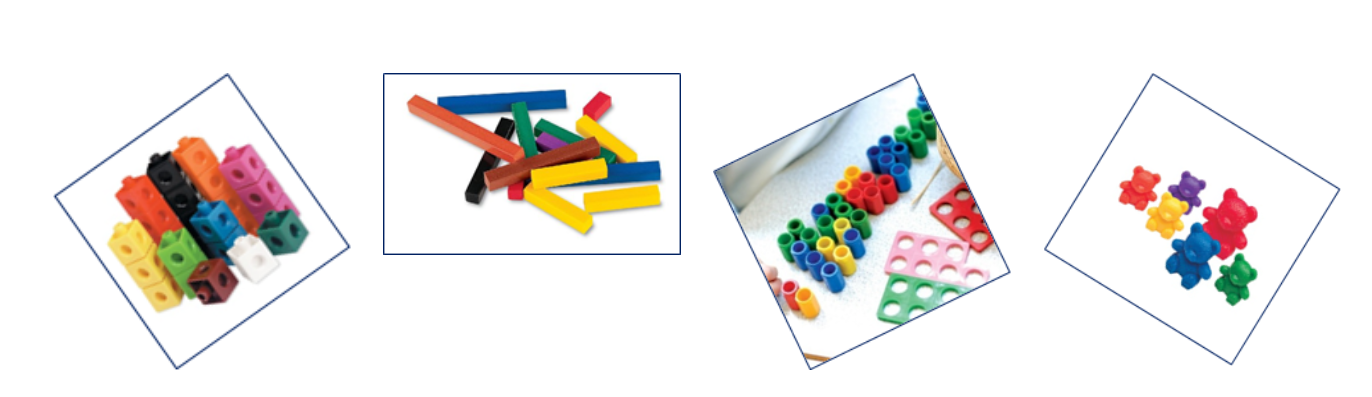
- We plan for children to be active learners. We ask ourselves “What manipulatives can we use?” We are skilled teachers, not slide show presenters!
- We aspire to provide ‘Challenge for all!’ We consider how quality first teaching can work for all learners including those with SEND. We ask ourselves “How will we enable low attainers and give high attainers the opportunities to apply their understanding in unfamiliar contexts?”
- We explicitly teach children how to present and record their maths work using a visualiser and actively avoid over-reliance on worksheets.
What is the impact of our mathematics curriculum?
We believe that spending longer on topics to help gain deeper understanding, and then revisiting ideas again and again in different contexts, helps our children develop their understanding of mathematics. We assess the effectiveness of our curriculum in the following ways.
Ongoing teacher assessment
Using the small steps structure, progression documents and the assessments described below helps our teachers to identify gaps and adjust teaching accordingly. At the start of a block of teaching we use ‘recap’ lessons to assess if children need more reinforcement of a concept before progressing. Through ‘live marking’, we can quickly spot if a child is struggling, and we can enable them with precise use of questioning, resources and support.
Assessments
We use end of block assessments to review what has been learnt and to inform the pace at which we progress onto new skills. We use termly Testbase assessments to familiarise children with test style questions and enable teachers to pinpoint any target areas. The summative assessments give teachers a snapshot of the attainment in each class. In line with KS2 SATs, a consistent score of approximately 55% would indicate ‘Expected’ and 85% would indicate ‘Greater Depth’. These assessments help inform our judgements and inform decisions about interventions for individuals or groups of learners.
Fluency assessments
We have a focused approach to teaching fluency. Each year group is responsible for over-learning a clearly defined set of basic number facts. We have used the Number Sense materials to help us structure this approach. We have also introduced half-termly, light-touch assessment of fluency, and it is exciting to see that children are becoming more efficient at recalling these facts. We believe that this will support children with reasoning and more complex maths because being fluent in basic number facts can free-up the short-term memory for trickier calculations.
Our teachers have agreed to teach and assess the following areas of fluency:
- YR “I can subitise to 5 and recognise some number patterns to 10”
- Y1 “I can make and break all the numbers from 1-10”
- Y2 “I know all the addition and subtraction facts within 10”
- Y3 “I know all the addition and subtraction facts across 10”
- Y4 “I know all the multiplication facts up to 12 x 12”
- Y5 “I know all the division facts related to the times tables”
- Y6 “I can use addition, subtraction, multiplication and division facts to solve a range of problems”
What are the inspirations for our mathematics curriculum?
As mentioned above, we adapt materials created by White Rose Education, an organisation that has been helping schools in the UK to improve maths education. However, we do not use any scheme exclusively because we seek the best possible materials available for each maths concept. Our teachers are members of the NCETM (National Centre for Excellence in the teaching of Mathematics) and we regularly use their materials for teaching and training, in particular the 'Ready to Progress' resources that enable a teacher to prioritise key concepts before moving on. We have also been inspired by the multi-sensory Numicon Approach and the carefully sequenced Number Sense approach. These approaches have helped us understand that having the right resources available can help children and teachers communicate their ideas.
What do our pupils have to say about maths?
“I love maths. I’ve learnt about writing numbers, drawing shapes and telling the time.” Year 2 child
“On maths for life day I met a software engineer and a psychotherapist. They use maths in their jobs.” Year 2 child
“Millie the fashion designer taught us about measuring. She said that fashion is maths.” Year 2 child
“I made a chatterbox during the maths lesson and it helps me to learn my number facts.” Year 3 child
“My favourite part of maths is percentages. 15% is the same as 15 out of 100.” Year 5 child
“What I found interesting about maths for life day was the measuring of pixels that Felix’s mum Katerina (Senior Director of Product) taught us about. The code linked to each pixel is linked to its exact colour.” Year 5 child
“On maths for life day I learned that there are 30 trillion bits of DNA in one human and there are 2 metres in one cell! The DNA in a human can stretch to the furthest planet and back twice!” Year 6 child
What are the key milestones in maths?
These key milestones are a snapshot to support teachers when assessing children’s learning. Please see the ‘Progression in skills and knowledge’ document to see how these are mapped in more detail.
|
Early Years (EYFC) |
|
|
Comparison Use number names and symbols when comparing numbers. Estimates of numbers of things. Counting Reciting numbers from 0 to 10 (and beyond) and back from 10 to 0. Increasingly confident at putting numerals in order 0 to 10 (ordinality). Cardinality Engages in subitising numbers up to five. Counts out up to 10 objects from a larger group. Matches the numeral with a group of items to show how many there are (up to 10) Composition Understand the ‘one more than/one less than’ relationship between consecutive numbers. Explore the composition of numbers to 10. Automatically recall number bonds for numbers 0-5 and some to 10. Spatial awareness Uses spatial language, including following and giving directions, using relative terms and describing what they see from different viewpoints. Shape Recognise a shape can have other shapes within it, just as numbers can. Uses informal language and analogies, (e.g. heart-shaped and hand-shaped leaves), as well as mathematical terms to describe shapes. Pattern Continue, copy and create repeating patterns. Measure Compare length, weight and capacity. |
|
|
Key Stage 1 |
|
|
By the end of Year 1, children should have started to:
|
By the end of Year 2, children should be able to:
|
|
Key Stage 2 |
|
|
By the end of Year 3 and 4, children should be able to:
|
By the end of Year 5 and 6 children should be able to:
|
Strengths and areas of development
What does assessment say about pupil progress?
Statutory data shows children achieved above national standards in KS2 in 2026. Disadvantaged children are also achieving well.
KS2 – 93.8% Expected + (National 75%), 46.9 % Greater Depth (National 27 %) Disadvantaged 85.7% ARE+ (National 62%)
Monitoring
We monitor maths by annually carrying out the following:
- Learning observations/ learning walks – checking for consistency in pedagogy, subject knowledge, and engagement and a focus on agreed priorities (e.g. adaptive teaching).
- Book study - reviewing pupils’ work and checking for progression and challenge, consistency with school policy, feedback and response, coverage of the curriculum and consistency.
- Pupil voice – to find out what they remember and understand, how confident they feel in the subject and what they enjoy or find difficult
- Data analysis/ assessment review – to identify trends over time, gaps between groups, areas of strength and weakness and use this to inform action planning and next steps
In Autumn Term 2026, a maths learning walk was carried out with our SPA, with a focus on adaptive teaching in maths, teachers checking understanding.
Strengths and areas of development
What does the monitoring cycle demonstrate to be strengths of maths?
We have embedded teaching for mastery across the school. Now we working on sustaining this approach, ensuring continued improvement, consistency and refinement of teaching for mastery. Manipulatives are used regularly in all classes to expose the structure of the mathematical concept, alongside clear representations. These enable encourage children to visualise the concept. Teachers use stem sentences and questioning to encourage children to find relationships and connections within the concept. Small steps and challenge are included in all lessons and both are available for all. Teachers have high expectations and communication between year groups is very strong. Teachers discuss which methods work well, which concepts are well understood and which need more attention. Assessment is used effectively to identify any areas of weakness which are subsequently addressed.
Our KS2 results show our children are achieving above national standards in all strands of numeracy. Pupils performed particularly well in ‘Fractions, decimals and percentages’, ‘Geometry’ and ‘Calculations’. Teachers have the confidence to spend time on key concepts and adapt their planning to ensure children have a secure understanding in these areas.
Children are building a clear understanding of how maths is relevant outside the classroom environments; we expose children to ‘real-life’ maths. Consolidating learning by playing games has raised children’s enjoyment of maths.
What are the specific areas of development identified by the monitoring cycle?
In the future, we would like to develop:
- Fluency in times tables
- Reasoning using precise mathematical language to explain
- Retrieval – including this in maths planning
- Greater depth mathematicians
- (Confidence with Statistics – providing opportunities to look at statistics in other subjects such as history and geography)
What do we want to see as we visit lessons?
In maths lessons, we expect to see the 5 main elements of the mastery approach embedded: Coherence, Representation and Structure, Mathematical Thinking, Variation and Fluency. Lessons will be inclusive by design; “This means understanding the needs of individual pupils and weaving specific approaches into everyday, high quality classroom teaching – being inclusive by design not as an afterthought” Professor Becky Francis. Teachers will provide “everyday support and adaptive teaching” to include learners with SEND, as well as other learners who face barriers to education.
Games will be used regularly in maths lessons to engage and allow time for consolidation. Challenge, ‘Have a Go Hippos’, will be available for all in every lesson. Precise use of mathematical vocabulary will be modelled and stem sentences and generalisations used to build precision, scaffold thought and embed concepts. Classrooms will have an up-to-date working wall which reflects current learning. Live marking is used throughout lessons by teachers and teaching assistants, to assess learning and identify misconceptions.
Progressions of skills and calculation policies
The National Curriculum
We use the approach described above to meet the learning objectives set out in the National Curriculum.
Please take a look at the Primary National Curriculum for Mathematics by clicking here.
Useful resources
Try these times tables challenges!